Sometimes sweet . . . Sometimes tart . . . Always a slice of life.

Wednesday, April 25, 2018

How Long Does It Take to Make a Quilt?


       When people find out that I’m a quilter, they are always curious about how long it takes me to make a quilt. I hesitate because don’t have a quick, definitive answer.
There are a lot of variables: size, complexity, if there’s a deadline or an open timeline, broken sewing machines, frustration, laziness, you get the picture. 
       Part of it depends on the size of the quilt. I’ve made a wall hanging (about 45” square) in a weekend. If you count a mug rug (about the size of a piece of notebook paper), I can put that together in a under an hour. The most recent quilt that I put the last stitch in, holds the all-time record of the longest time I’ve ever spent making a quilt.
       My new year’s resolution for 2018 was to finish up some of the quilts that I started, but haven’t completed. My plan was to finish one per month. It’s April and I just completed my third quilt.
       This quilt wasn’t even in my stack of UFOs (UnFinished Objects), but in the wee hours of a night of insomnia when my mind was reviewing a million things, I remembered these particular quilt blocks. I thought it would be quick to whip into an actual quilt that would tie up some loose ends as well as help me catch up to my one quilt a month goal.
       Years ago, I hand stitched several Hawaiian quilt blocks that were intended to be pillow covers. They would be great practice before making a bed sized Hawaiian quilt. These blocks were my first attempts at quilting. I enjoyed making them, but thought how many pillows did I really need? Instead, I would combine them into a quilt.
       Here I was, many, many years later and I’d forgotten how many I'd made. I’d also moved several times since I started stitching them and had forgotten where I stored them in this house. After a few days of digging through the logical places where they should be, I found them in an illogical place, under my long arm machine. 
       I had completed five on white backgrounds: Monstera leaf was dark green, 


               Ulu (or breadfruit) was a pale yellow, 

                              Red Ginger was red, 

                              Orchid was purple,

                             and Hibiscus was red. 

I needed a sixth block to make a quilt three blocks across and two blocks down.
       In totally unrelated news, the deadline to file taxes was looming, so March 18th was the perfect time to ignore the taxes and start a hand quilting project. 
       In my quest to find the blocks, I’d also found my Hawaiian quilting books, so I thumbed through them looking for my next block: Na Lani Pule (Heavens Prayers). I went to the fabric store and chose a solid deep turquoise Kona cotton for this block.
These blocks are "on point."
       Tucked into the back of one of my Hawaiian quilting books was a sketch on graph paper of my original plan—a grid of blocks, three across and four down. I also recalled thinking about setting them on point. I obviously didn't have time to make seven more blocks. It was time for a revised plan.
Hawaiian Quilt Plan A.

       On April 10th the Na Lani Pule block was complete. I admired it, but not for long. I got down to business on our taxes. After I sent them in, it was back to the Hawaiian quilt blocks up on my design wall.
Na Lani Pule

       I shuffled them around. I didn’t like that there were two red blocks. They were overpowering. The yellow ulu block was too pale. What was I thinking when I chose that lemon yellow? There was barely any contrast.
     I kicked out the red hibiscus. I thought about kicking out the yellow ulu, but it was the second block I’d ever made and Hawaiian quilting tradition says that it should be the first block you make to ensure that you make many more quilts.
       Then I measured the blocks. They varied in size from 19-1/2” squares to the brand new turquoise block that was 17-1/2” square. Why hadn’t I followed my "note to self" to enlarge the pattern by 15% before I started procrastination quilting? I kicked out Na Lani Pule too. It would become a pillow cover along with the red hibiscus block.
  
     There would be four blocks in this quilt, stacked, not on point. It would be a wall hanging. It was a little tricky since the blocks were already quilted. I carefully trimmed them each down to a uniform 18-1/2” square. Then I chose a deep blue cotton like the color of the Pacific Ocean between the Hawaiian Islands for the joining strips.
       As I worked, I tried to recall when I started this project. We were living in Hawaii, renting the bottom floor of a house in Manoa. Although both of my grandmothers made Hawaiian quilts, they weren’t making them when I was around. I should have, but didn’t think to ask them for advice.
       Not only did I “inherit” my love of sewing from my grandmothers, I inherited a complete full size Hawaiian quilt and a partially completed Hawaiian quilt top from Grandma Louise Ralston Keolanui. My auntie also gave me all of her mother's Hawaiian quilt patterns that she had designed herself.
Grandma Keolanui, cousin Jane, Auntie Lani and cousin Judy
with the Queen's Comb quilt that Grandma made.

 
Grandma Ellis holding great grandson Johnny Stark.
From my other grandmother, Grandma Harriet Dwight Ellis, I inherited her in-progress Hawaiian quilt blocks and a sizable fabric and yarn stash.

       When my sister passed away, she and her husband gave me a Hawaiian quilt top from Grandma Keolanui that Cynthia had been working on along with her own fabric stash and what she’d gotten from our grandmothers. The huge size of my stash isn’t surprising. It’s genetic!
       When I’m in Hawaii and drive through the intersection of University Avenue and King Street in Moiliili, I still remember the seemingly endless hours that my sister, brother, cousins, and I spent in Kuni’s Dry Goods store with my Mom, Grandmother, and Aunties while they pored over sewing pattern books and then shopped for fabric.

 If we were good, they’d treat us to crack seed [Chinese preserved plums] scooped out of giant glass jars from the tiny store across the parking lot.
       Instead of asking my grandmothers for quilting lessons, or at least for some tips when I started my first quilt, I relied on the instructions in a kit purchased at Liberty House, a department store that was later bought out by Macy’s.
       The deep green fabric with the Monstera Leaf pattern appealed to me back then. It still does. When I flipped that finished Monstera Leaf block over and looked at the stitching, I shook my head and then snickered a little. There are huge knots all over the back. Back then I knotted my thread by wrapping the thread around my index finger and then rolling it off the end and tugging.
Huge beginner's knots
       Now I make a quilter’s knot by wrapping the thread around the tip of my needle and then sliding it down to the end. It’s a much smaller knot which makes it easier to pop through a layer of fabric, to bury the knot in the batting. The stitches on the front of that block look OK, but they are not even in size. On the back they’re much longer than on the front. It was a good thing I matched my thread color to the forest green of the leaf. My uneven beginner quilt stiches don’t show much.
       On the Ulu block, my second Hawaiian quilt block, the knots on the back still look like tiny beach balls, but the stitching is more even. A darker yellow would've been a better color choice, but I was still a beginner. 
       By the time I stitched the orchid block, in 2002 the quality of my quilting was much improved. I had actually been to two classes to learn how to hand applique and hand quilt. I had also watched Diedra McElroy’s video of That Perfect Stitch and practiced along with her.
Stitching on the back of the orchid block.
 

       Some people would have hidden those weird knots and uneven stitches under another layer of fabric, but I appreciate seeing my progress as a quilter. It tells a story.
       Those first quilt blocks look good together. I'm glad they aren't stowed away in a plastic bin anymore, hidden from view. 

Red hibiscus and Na Lani Pule blocks
 made into pillow covers.
       
Quilt label


Backs of the Hawaiian quilt pillows
made with fabrics from my sister Cynthia's stash.


If my first quilting attempts were a bit surprising, so was the realization that my long held claim that I started quilting in 1999 is wrong. That is when I started machine quilting. But I actually started quilting by hand, and my best guess is that I picked up a quilting needle in 1983. That means this quilt took me 35 years to make! I don’t think I’ll mention that number the next time someone asks me how long it takes to make a quilt.

Laura Keolanui Stark is starting her next “quilt of the month” tomorrow. She can be reached at stark.laura.k@gmail.com.


Saturday, April 21, 2018

Java's Story


       Yesterday we lost our pet cat Java. Of all the pets we’ve had over the years, Java was the one who was an enigma.
       Java joined our family after our dog Lucky was hit by a car. (I know, not so lucky.) In their grief following that heartbreaking loss, the kids said they never wanted another dog.
       One day after Johnny visited his friend Dave, they came back to our house and said that Dave’s neighbor’s cat had just had a litter of kittens. They were Manx kittens with just nubs for tails. They went over and played with the kittens whenever they got a chance.
       And the begging began. Dave’s mother said they couldn’t have a kitten. I said we couldn’t have a kitten either. We already had a cat, Velvet, who had been abandoned under our house as a kitten. Dave’s mom held her ground. I didn’t.
       Johnny chose the kitten he wanted. We had to wait until they were old enough to be weaned. When the day arrived, we went to pick up the kitten. At the last minute, Johnny changed his mind about which one he wanted and chose another one.
       We came home with an adorable, calico Manx. Johnny thought the gray, and tan speckled kitten with white paws and a white bib was a male. The naming process began. 
      I thought Freckles would be cute because of the cat’s coloring or Nubsy because of its bobbed tail. Various names were nominated. Sarah’s suggestion, Java, was chosen. I didn’t think it fit. This was not a black cat and it wasn’t overly active, but when three kids (Dave was involved too) decide that “Java” is a cool name, you go with it. After all, I’d already caved into getting another cat, when I’m not even a cat person.
       We took Java to the vet for a checkup. That’s when, to his dismay, Johnny found out that Java was a female not a male. The vet said that calico cats are almost always females. Who knew? Obviously not us.
      As the days went by, Johnny’s girl cat decided she wasn’t Johnny’s. She was Sarah’s. She slept on Sarah’s bed and it was Sarah the third grader who carried Java around petting her and introducing her to her friends.

       We called her our ditzy blonde. It took her a long time to figure out that her name was Java. She also had problems figuring out what a litter box was for. Velvet, our black (or brunette) feral cat hadn’t had these issues. Velvet wasn’t keen on Java. The feeling was mutual.

Java studying hard so we'd stop saying she was ditzy.

       When we took the two cats to a mobile vet that was microchipping cats for identification, we warned them to be careful because Velvet was a feral cat. At pick up, they told us that Velvet hadn’t been a problem, but Java, our little domestic cat, had gone ballistic.
       Java was always a tiny thing. She never got heavier than 10 pounds. Manx cats have an interesting build. Their hind quarters are taller than their front. They also run like bunnies. Their two front paws hit the ground at the same time, and their two back paws come forward at the same time on either side of the front paws.

       Their nubby tails are a genetic mutation that are actually a spinal defect. They are missing vertebrae. We found out very quickly that Java’s nub was extremely sensitive.
Why yes, I can fit it this basket full of papers.
 
If you touched her nub, like an unwitting vet tech who tried to take her temperature, she would let out a growl and snarl like a cougar, claw at you and clamp that nub down denying any access. For a tiny thing, she could put up a heck of a fight.

       I’d like to say that Java got along with all the pets that came into our house, but that would be a lie. She tolerated them at best. She looked at our dogs as if she thought they were the most disgusting, ugliest cats she'd ever seen. She really should have been in a home where she was the only pet. I don’t know if that’s a Manx trait, or just a Java trait.
       Her go-to reaction to overly friendly dogs was a lightning fast jab to the nose. If that didn’t work, she would turn on that bunny run and scramble under a couch. That strategy was a success until she encountered our dachshund Suzie who had no problem following her under low furniture. Java was shocked!
       Our other two cats, always tried to escape from the house whenever a door opened. Java, true to her domesticated roots, didn’t understand the allure, except once. One morning I opened the door to get the newspaper and was shocked to see Java calmly sitting on the front porch. She had been out all night. She mewed at me as if to say, “Well, it’s about time! I have no idea why that other stupid cat always wants to go out," and then she sashayed into the house. 
 
       As the years went by, Java had health problems. I rushed her to the vet one day after she had a seizure. She had kidney issues. Because of her spinal defect she was prone to constipation. We had to sprinkle a laxative on her wet food to help her bowel movements.
Java with bandaged leg after having an IV.
 
I called Sarah at college to break it to her that 10-year-old Java might not be around much longer. Ditzy Java had other ideas.

       Dave, Java’s other favorite person in the world, graduated from college and came to live with us for awhile because his parents had moved. Java was a happy, purring kitty with Dave in the house. Years later, Dave came to visit from California with his new bride and Java looked at him with adoring eyes.

       He noticed that she was more friendly. She had been aloof to everyone but Sarah and Dave when our house was full of kids. After the nest was empty, she warmed up to John and me.
     
       Cats live longer than dogs. But another surprise from Java, was that even though she had these chronic health problems, she outlived two dogs, and Velvet who was only a few years older than her. She met two “new” dogs, and trained them to approach her with extreme caution. 
   
      The average lifespan for a Manx is 8-14 years. Java, the enigma, lived her quiet, lady like life for 18 years. We will miss the soul searching stares from her golden eyes, her feather light steps, her distinctive trills, and gentle purring.

Laura Keolanui Stark can be reached at stark.laura.k@gmail.com.

Sunday, March 18, 2018

Kalama Beach


       For a few years now I’ve flown to Hawaii three or four times a year to visit my elderly parents who are in their eighties. My father is in a nursing home now. He has vascular dementia. My sister Cynthia who lived in the next town over, passed away in 2015. My brother Bob had a massive stroke and lives on Maui. I usually get a layover on Maui to meet with him and his wife for a few hours. 
Me with brother Bob and his wife Kathleen at the Zippy's in Kahului, Maui.
Then it's on to Oahu to see my Mom and Dad. Mom has had to adjust to taking care of the house and finances by herself. She goes to visit my Dad every day to feed him his lunch. I try to go back three or four times a year to help her out.
Mom feeding Dad lunch.
Mom and I visiting Dad.

       As soon as people hear that I’m going to Hawaii, they forget the beginning of the sentence about visiting to help my parents and assume I’m going on vacation. But when I go to Hawaii, I’m going to my other home. I'm a native Hawaiian. I’m going to see my family, not to be a tourist. I get irritated when people ask me if I went to Aulani, or ask where my tan is.
       I’m usually driving around to visit my father, take my mother to doctor’s appointments, and cramming a lot of errands into a week-long visit to make mom’s life easier after I leave. The only tan I get is if my left arm is out the window when I’m driving. My husband John is in Washington, holding down the fort, so I’m kind of on my own. Yes, Hawaii is a beautiful setting, but taking care of elderly parents is the same no matter where you are.
Entrance to Hale Nani Rehabilitation and Nursing Home. 

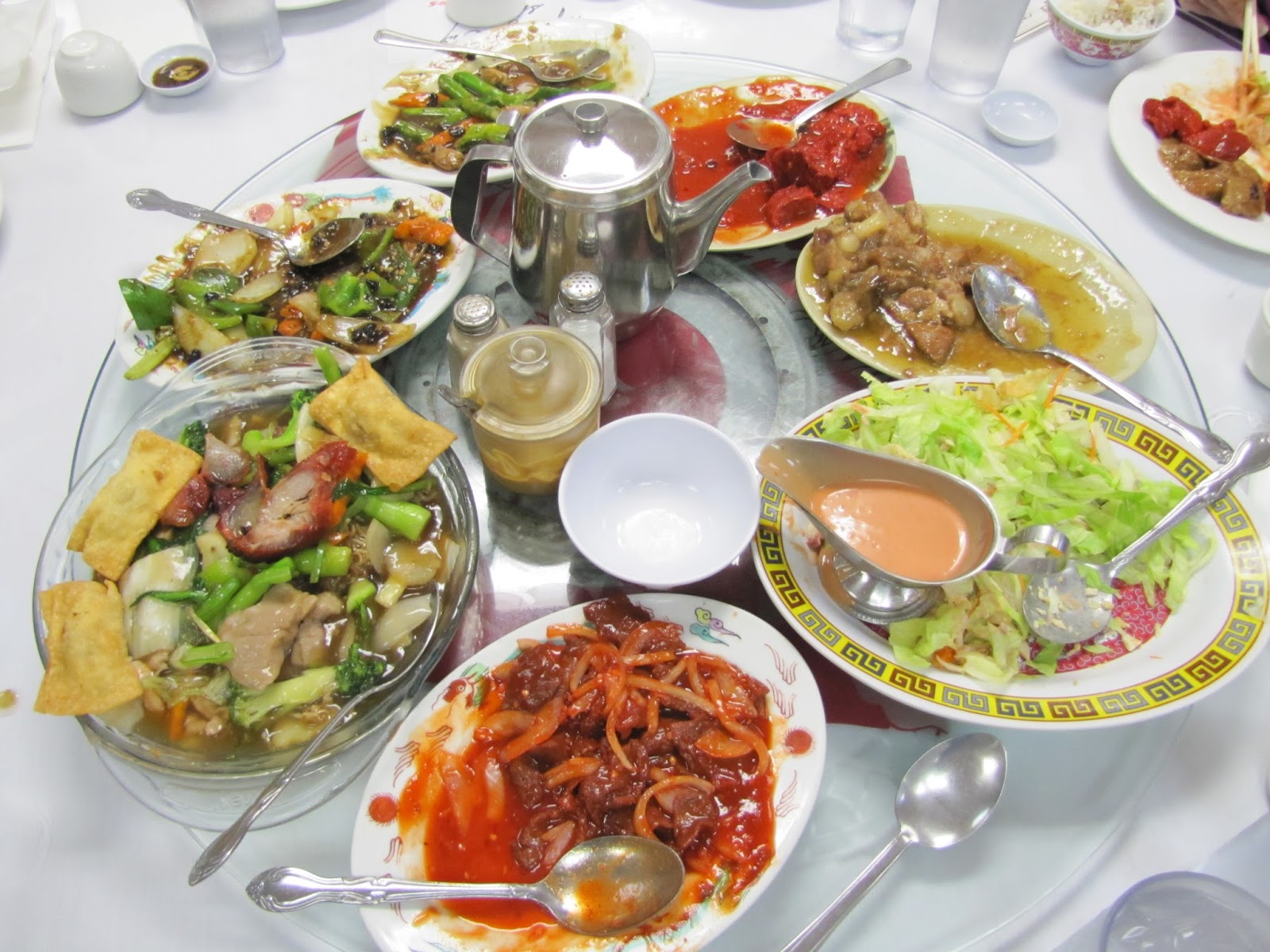
       For me the highlight of my trips center around eating local food with my mother and my brother-in-law Bruce, or by myself—at Zippy’s or the Chinese restaurant close to my parents’ house. I savor the special dishes that I can’t get in Washington:
Mom and I eating macademia nut haupia pancakes and bacon.

Saimin

Somen salad
Zip min at Zippy's
saimin, zip min, somen salad, kalua pork and cabbage, chicken long rice,
Kalua Pork and Cabbage

kau yuk (Chinese pot roast), crisp gau gee min (noodles with crispy fried gau gee which are similar to won ton), shrimp with black bean sauce, 


Variety of malasadas--plain and stuffed.


malasadas, Chantilly cake, dobash cake, 
Dobash cake.
coco puffs, the list goes on and on. These are my comfort foods from Hawaii.

       I also like to go to a store named Don Quijote to buy souvenirs to take home. It’s in the heart of Honolulu and when John and I lived in Hawaii in the 1980s, Holiday Mart was in the same building. That’s where we went to buy groceries. I swear they haven’t repainted the double decker parking lot or changed the tile flooring since we were scraping by when John was a student at UH. We used to look for our favorite and fastest cashier, Alberta before there were scan barcodes on everything. Alberta had the prices memorized!

       As shocking as this will sound, I don’t go to the beach often when I visit. I think the last time I went was two years ago. The closest beach is only a half a mile from my parents’ house. But here’s the thing. If you go to the beach in Hawaii, you will notice that locals rarely go alone. My parents taught me to never go alone. They were very strong swimmers. I am not, and I know that I’m no match for the Pacific Ocean. In Hawaii, there are currents named for where they will take you—like the “Molokai Express.” Hawaii is 3000 miles from any other land mass. So, I’m cautious. Even strong swimmers can get in trouble and drown.
       My favorite beach, Lanikai, has been overrun by tourists thanks to magazines ranking it among the top 5 beaches in the world. So the beach where we used to play most often as kids, and where my cousin’s ashes were scattered after she died, now has tour buses dumping tons of tourists there. My aunt, who lives across the street from Lanikai beach sometimes spends hours trying to get home and then finds tourists parked all over her yard. So I don’t savor Lanikai’s gentle waves much anymore.
Lanikai Beach, 2013
       A few years ago, it was my last day in Hawaii after a few weeks, and as I was packing I realized I hadn’t even been to the beach. It was getting late. I decided to go to the beach closest to my parents house, Kalama Beach. This beach can be dicey, a little dangerous sometimes. It’s not gentle like Lanikai or Waikiki. There’s a strong current and no life guards. (There aren't life guards at Lanikai either.) As I closed the screen door behind me, my mother cautioned, “You be careful! I don’t like you swimming by yourself.”
       The sun was setting which was good because everybody else was leaving so I was "swimming" against the current in the public right of way leading the the water. My slippers slapped the bottoms of my feet past the legendary naupaka bushes with their half flowers and I plowed through the soft sand sprinkled with the familiar tiny pine cones from the ironwood trees. 
       I wore some old board shorts and a tankini top with a pareau wrapped around me. I laid my ancient straw mat, towel and slippers near some local Hawaiians—who are usually sitting in the shade of trees or a tarp tent, not sprawled out on towels to get a tan. They looked at me with faces that said, “Eh, you local. Why you by yo’self? Kinda late too.”
       I just raised my chin to them, and then waded into that perfect clear green/blue water, scooping salt water onto my chest, shoulders, and face the way my father had taught me many years ago. I timed it so I got past where the waves were breaking and then dove under one. The water felt so good I couldn’t help but grin and toss my wet hair. Then I rolled over, laid back and floated with my memories.

      Every time I go to Kalama Beach I remember a story my Dad told us. When he was a teenager, he and his buddies were bodysurfing. One of them caught a wave and to show off, he curled one of his legs back so that his calf and foot were sticking up out of the water. As they watched, a barracuda jumped out of the water and bit his calf. They found this hilariously funny.
       When I was in 8th grade at Kalaheo which was a junior high school back then (now it’s a high school), some friends threw a surprise birthday party for me at Kalama Beach after school. John and I went there countless times while we lived with my parents after we first moved to Hawaii as newlyweds. Sometimes my brother and sister were with us. Like me, my sister would scream a little and try to walk on water when a piece of limu (seaweed) wrapped around our ankles. Years later, I passed my parents' water safety lessons on to my kids and then watched them boogie board and frolic in Kalama’s waves.
       This is also the beach where my brother Bob learned to body surf. He was probably five years old. I’m not sure my mother was fully onboard with this idea. When we were little, we weren’t allowed to have blue or green bathing suits. My parents wanted us to wear bright colors so that if we got in trouble in the water, they could find us. My brother’s swim shorts were red with white trim stripes.
       I listened carefully to my father as he gave my brother instructions: “When a wave comes, I’m going to push you really hard. You curve your shoulders in and kick as hard as you can.”
       When I asked if I could do it too, he told me girls couldn’t body surf because even when they curved their shoulders in, there were two bumps stopping the water from flowing through the tunnel of your shoulders and chest. At nine years old, I know that I didn’t have my bumps yet. I think he just wanted it to be a father-son moment.
       He took my brother pretty far out. My mom was wading in the shallow water and watching them. My four year old sister and I were sitting on the beach watching too. A big wave swelled. My father launched my brother.
       We watched for his head to pop up. It didn’t. We looked for his red bathing suit. Nothing. My Dad started swimming in toward us, stroking quickly with his head out of the water, looking for Bob. My mother started swimming out, searching too. 
       It seemed like forever, but it was probably only seconds. My brother skidded up onto the sand on his belly, then jumped up and down with glee. “Let’s do it again!” He’d gone way past where my father thought he’d pop up. He was a natural!
       My memories ebbed. The moon was rising. The tide was changing. I could feel the current pulling me, so I kept an eye on “my locals” to keep track of how far I was being pulled. They were keeping an eye on me too.
       I bodysurfed a few waves, in spite of my bumps. It felt so good! All the stress I’d walked in with had disappeared. After the ocean threw me back up onto the beach, I took the hint. I gathered my stuff up, wrapped my pareau around me, smiled a thank you to the locals who nodded and smiled back, and then I headed home. They started packing up too once I was in.
       It was another good memory of Kalama Beach. Maybe the next time I go, I won’t be by myself.

Laura Keolanui Stark is back home in Washington state. She’s not going up in the Space Needle or doing any tourist stuff here either.

Friday, January 26, 2018

Snow in Snoqualmie Pass Quilt

I first saw this quilt in the Jan/Feb 2013 issue of McCalls Quilting Magazine. It was designed by Patti Corey and named “Misty Pines.” 


When I saw it I was immediately reminded of driving through Snoqualmie Pass on my way to and from WSU in Pullman, WA while both of my kids were in college. Before every trip 5-1/2 hour trip I’d check to see if there was “snow in the pass.” The elevation up there is more than 3000 feet, so it's not unusual for the weather to be snowy in the pass while it's raining down here at sea level. 
      On one trip following Sarah’s graduation, John and I were moving her furniture back home to the west side. John was driving his Ford F150 loaded with a dresser, desk, and other household items covered with a tarp. I was following him in Sarah’s Audi.

     It was below freezing and the sun had already set. As we got closer to the pass, just west of Ellensburg (the halfway point), one of the warning signs announced dangerous snowy conditions in the pass. I called Sarah and asked her to go online and check the Department of Transportation’s website to see what was going in the pass.
       She did and reported that as she was checking, they were closing exits on I-90 up in the pass, seven total. A semi-tractor trailer truck was among the many accidents causing the closure. I called John, up ahead of me in the truck and told him to get off at the next exit. We pulled into the deserted parking lot of a closed fruit stand and decided we better turn around, go back to Ellensburg, and get a hotel room.
     That’s exactly what we did. Luckily, we got the last hotel room at the Holiday Inn Express, where the phone was ringing off the hook. We were nervous about leaving an apartment worth of belongings secured with only a tarp in the parking lot as it snowed, but we had no choice.
      The next morning, the pass was clear and we made it safely back to Puyallup with everything, including our nerves, intact. (see August 15, 2013 blog post)
      In ideal conditions, there's snow in the pass frosting the  trees, but the pavement on I-90 is clear of snow. That’s when the views of spruce, Douglas firs, cedar and hemlock trees covered with snow are breathtaking and it's safe to calmly appreciate them. Those are the memories that the “Misty Pines” quilt brought back to me. I had to make it!
      It was different from any other quilt that I’ve made. The skill level of this quilt is “Advanced.” It’s not because of the construction. I’ve made flying geese blocks many times before, and the angled strips are basic units. What makes this quilt “advanced,” is that it is a study in contrast. The description in the magazine says, “In Patti’s stunning quilt, careful placement of fabrics creates a dramatic scene of snow-covered trees backed by winter darkness.”
      The original is composed in grays and white. But up in Snoqualmie pass, it’s dark green, gray, and white, so I changed up the color scheme. There wasn’t much, if any, gray in my fabric stash. The original quilt used fabrics that had textures from nature—stones, or mottled bark. I also used those. 


In addition, I shopped for fabric online and at local quilt shops—Pacific Fabrics and the Quilt Barn in Puyallup, Evergreen Quilting and Trains in Tacoma picking up green fabrics to fit my color scheme--batiks, including some with stacked points that looked like pine trees to me.
 
Fairy Frost fabrics added some shimmer.

I cut and carefully placed pieces on my design wall making sure that light fabrics started at the top, falling into pointed dark mountain fabrics that contrasted with increasingly lighter trees that were snowy white at the bottom. When the quilt top was completed, I stood back and admired it. It was majestic and quiet, everything I’d envisioned.
Quilt top up on my design wall.

      But a quilt top isn't a quilt until it's quilted. I made the backing, layered it with the batting and pin basted it. That’s where progress stalled. 
      I couldn’t decide how to quilt it. I wanted the quilting to look like snow falling. But the snowflakes I doodled looked too childlike. The free motion designs I found looked too playful. This quilt called for something elegant and subtle.
      While the quilt rested on the table next to my longarm sewing machine with two other quilt tops waiting to be quilted, life happened. I lost my sister Cynthia to breast cancer. My father’s vascular dementia worsened and he was moved into a nursing home. My brother had a stroke. Daughter Sarah earned a master’s degree at Northwestern University in Evanston outside of Chicago. Son Johnny started working at Amazon in Seattle. Husband John had major back surgery. 
      New quilting projects caught my eye. My longarm, barely used, had locked up in August 2017 when I tried to get back to quilting. It went into the shop to be repaired.
     As 2018 began, I unfolded the quilt that I in my mind I called, “Snow in the Pass.” I was determined to complete it. It was too beautiful to sit folded up any longer. It should be hanging up by the stairs in our family room, while it was still winter. Quilts are supposed to be warm, but I wanted this one to look frosty.
     I decided to quilt snowflakes of different sizes on it like fragile lace, using metallic white thread to give it some sparkle. (This is the first time I used metallic thread. I’ve heard nightmares about metallic thread shredding and breaking. I consulted Nancy Ziemann online for her needle recommendations. Her advice was invaluable and I didn’t have any problems.) I traced the snowflakes on Golden Threads tear away paper, pinned them to the quilt, and then sewed on top of the paper using my walking foot.


The angles were too sharp and precise for free motion quilting. When those were done, I went back with my walking foot, switched to silvery variegated rayon thread, and quilted gently curving lines lengthwise to look like gentle snowfall.


      It was ready for a binding. I was unsure what color the binding should be. Should I combine different fabrics for the binding? This was a scenic art quilt so it was tricky. I also needed to make a label. I slept on it overnight.
     In the morning, I looked for the magazine that the pattern had come from so that I could acknowledge it on the label. I usually set aside any magazines that I make a quilt from. I thought this quilt was on the cover of American Patchwork and Quilting. That wasn’t with my saved magazines. I went online to look at the covers of back issues. No luck.
I googled “pine tree quilt” images. There it was! I had been looking for the wrong magazine, plus it wasn’t on the cover. The correct magazine was indeed in my special magazine collection.
    Online, I went to McCall’s Quilting magazine and searched for “Misty Pines.” When it came up, it showed that last year they did a monthly quilt-along to demonstrate how to make this quilt because the kit was so popular, it sold out. I clicked on the last episode to see how they handled the binding. I’m so glad that I did that.
     They didn’t bind it. They made a facing! Perfect for this quilt! I watched the video of Laura Stone Roberts apply the facing. Her instructions were easy to follow. I sewed the facing on, learning yet another new technique.  Then I added a label, and hanging sleeve, hand stitching them on, and pulled off the tracing paper snowflakes. 
   “Snow in Snoqualmie Pass” is finished at last!
No binding showing because of the facing. Thank you trusty hubby quilt holder!


Here, you can see the facing sewn to the back of the quilt.


Laura Keolanui Stark is choosing her next quilt to finish. She can be reached at stark.laura.k@gmail.com.